Here is something nobody tells you clearly enough: "when should I apply for scholarships" does not have one answer. It has at least four and the answer that applies to your roommate, your younger sibling, or that one friend who always seems to have everything figured out might be completely wrong for you.
A high school senior applying for fall 2026 enrollment is on a totally different clock than a current sophomore who just declared a major, or a community college student planning to transfer, or someone heading into a master's program for the first time. And yet most scholarship guides treat everyone the same "start early, deadlines are usually in fall and spring" which is true, technically, but not actually useful if you do not know where you fit.
So let's fix that. Here is the 2026-2027 scholarship timeline, broken down by where you actually are right now.
If You're a High School Senior (Class of 2026): Your Window Is Already Open
If you are graduating high school in 2026 and heading to college in fall 2026, you are in the most time-sensitive group on this list and also, encouragingly, the group with the most scholarship opportunities specifically built for you.
Fall semester (now through December) is genuinely your peak window. The majority of large, well-known scholarships, the ones with five-figure awards and national name recognition — open applications in late summer and close somewhere between October and January. This is not a coincidence. Scholarship committees want to award funds before the academic year they are meant to support begins, which means fall of senior year is when the bulk of the major opportunities are live simultaneously.
If there is one thing to internalize from this section, it is this: do not wait until spring of senior year thinking "I'll catch the scholarships after I get my acceptance letters." By spring, a significant portion of the biggest awards have already closed. The students who win the most scholarship money are usually the ones applying in October and November, often before they even know which college they are attending.
FAFSA timing matters here too. The FAFSA for the 2026-2027 academic year typically opens around October 1st of the prior year, and submitting it early is one of the highest-leverage things a senior can do not just for federal aid, but because many institutional and state scholarships use FAFSA data to determine eligibility, and some operate on a first-come, first-served basis within their funding pool.
Spring semester (January through May) is not over, but it shifts in character. Local scholarships from community foundations, employers, religious organizations, and civic groups — tend to cluster their deadlines in this window, often because they are tied to local graduation timelines. These awards are typically smaller individually but have far less competition, sometimes literally dozens of applicants instead of thousands.
The practical takeaway for seniors: treat fall as your "go big" season for major national scholarships, and treat spring as your "go local" season for community-based awards. Both matter, but they require different searches and different timing.

If You're Already in College (Sophomore or Junior Year): You're Not Done Applying
Here is a misconception that costs current college students real money every year: the assumption that scholarships are mainly for incoming freshmen, and that once you are enrolled, the scholarship search is basically over.
It is not. In fact, for many students, sophomore and junior year is when scholarship opportunities actually become more targeted and, in some cases, easier to win because the competition pool shrinks dramatically once you are no longer competing against the entire graduating high school class nationwide.
The moment you declare a major is a trigger point. Departmental scholarships, funded by a specific academic department, often tied to a major or area of study, are one of the most underused categories of student aid. These awards frequently have far fewer applicants than general scholarships, sometimes because students do not even know their department has scholarship funds available. If you declared a major recently, your first move should be checking directly with that department's office, in addition to searching general databases.
Timing for current students tends to follow the academic calendar more loosely than the rigid fall/spring split that seniors experience. Many institutional scholarships for continuing students have spring deadlines for funding the following academic year meaning a junior applying in March 2026 might be securing funding for the 2026-2027 year. This is exactly the kind of timing nuance that gets lost when scholarship advice is written generically for "students" without specifying where in their academic journey they are.
Study abroad, research, and specialized program scholarships also tend to have their own separate timelines, often six to nine months ahead of the program start date. If you are a sophomore or junior considering a study abroad semester or a research opportunity for 2026-2027, the scholarship deadlines for that funding may already be approaching even if the program itself feels far away.
The bottom line for current undergrads: do not assume the scholarship search ended when you got your acceptance letter. For 2026-2027 funding specifically, spring of the prior year is often your real deadline window, which means right now may already be later than you think.

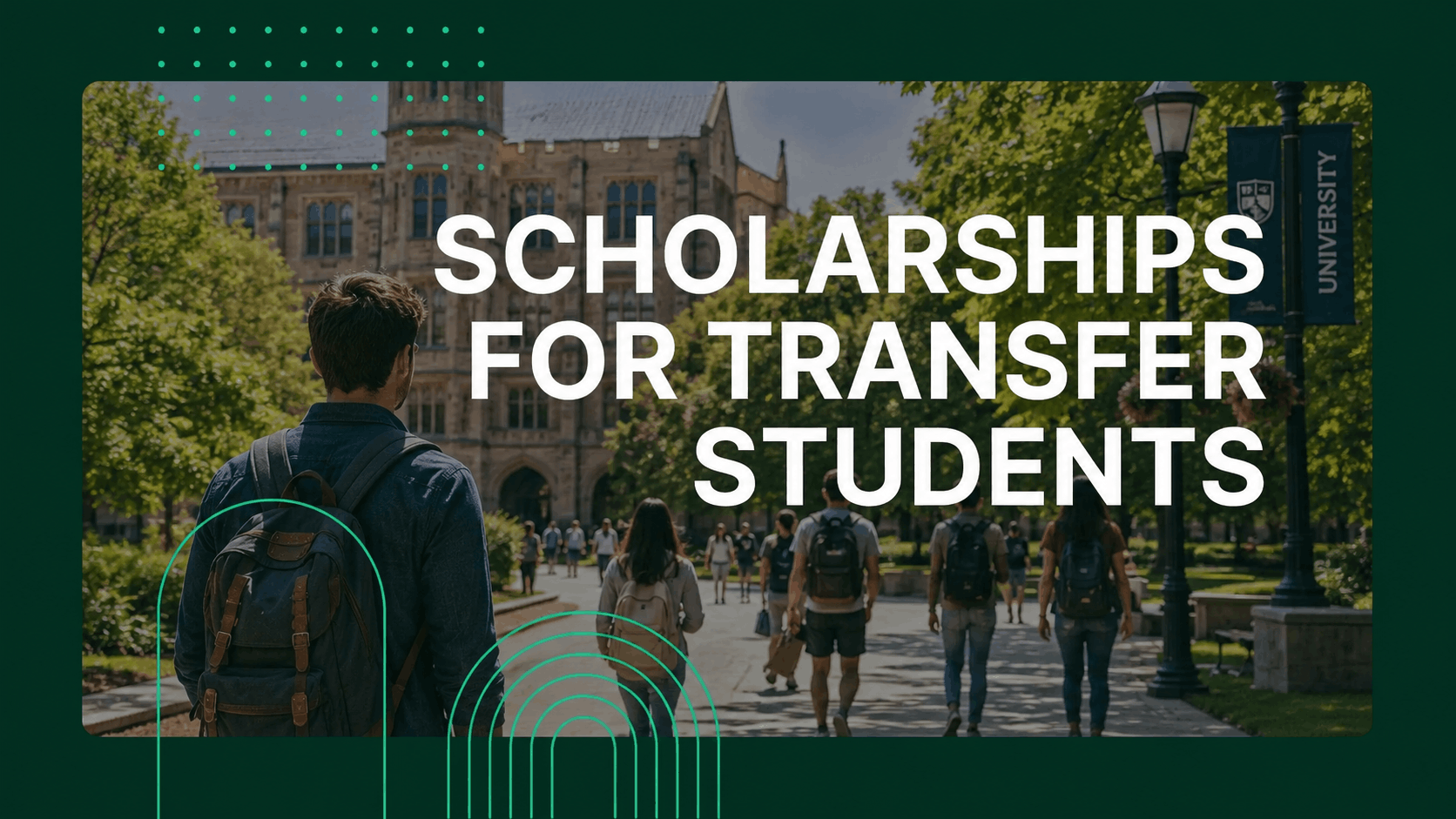
If You're Transferring (Community College to Four-Year, or School to School): Your Timeline Runs on Its Own Clock
Transfer students occupy a strange space in the scholarship world. You are not a first-time freshman, so a lot of "incoming student" scholarships do not apply to you. But you are also new to your destination institution, which means you have not built the institutional relationships that help continuing students find departmental funding.
The good news: transfer-specific scholarships exist precisely because this gap is well-recognized, and they tend to have less competition than general scholarships because fewer students search for them by name.
If you are planning a transfer for fall 2026, your scholarship timeline should generally run parallel to your transfer application timeline often starting six to twelve months in advance. Many four-year institutions have transfer-specific scholarship programs with their own application processes, separate from general financial aid, and these often have earlier deadlines than students expect because the institution wants to make funding offers as part of the overall admission and enrollment package.
Community college foundations themselves are also a source worth checking before you leave. Some community colleges offer "transfer scholarships" specifically intended to support students moving on to a four-year institution, essentially a parting gift from your current school that can be applied at your next one. These are easy to miss because students mentally "check out" of their current institution's resources once a transfer is in motion.
Timing-wise, treat the transfer scholarship search as starting the moment you start your transfer applications - not after you are accepted. Just like high school seniors applying for fall 2026, by the time you have an acceptance letter in hand from your destination school, some of the scholarship deadlines tied to that admission cycle may have already passed.
If You're Heading to Graduate School: The Timeline Is Longer Than You Think
Graduate school scholarships and fellowships operate on a different rhythm entirely compared to undergraduate aid, and this is the group most likely to be caught off guard by how early the real opportunities open.
For programs starting in fall 2026, the serious funding search should generally be underway well before you have even been accepted often a full year or more in advance for the most competitive fellowships. Many prestigious graduate fellowships, particularly in research-intensive fields, have application cycles that open in the spring or summer before the fall they would fund, meaning a student hoping to start a graduate program in fall 2026 may need to be applying for major fellowship funding as early as the preceding spring or summer of 2025.
This sounds intense, and for the most competitive national fellowships, it genuinely is. But the timeline pressure decreases as you move from "highly competitive national fellowship" toward "departmental funding" and "institutional graduate assistantships," which often run on timelines closer to, though usually still earlier than, standard undergraduate financial aid.
One distinction that trips up a lot of first-time graduate applicants: many graduate funding opportunities are not labeled "scholarships" at all. They are called fellowships, assistantships, traineeships, or stipends and a search that only uses the word "scholarship" will miss a significant portion of available graduate funding. If you are searching for graduate funding for 2026-2027, broaden your search terms accordingly.
For students applying to graduate programs for fall 2026, a reasonable rule of thumb is this: if you are submitting program applications in the fall or winter of 2025, your scholarship and fellowship search for 2026-2027 funding should be running in parallel, not afterward. Waiting until after admission decisions arrive in spring 2026 means missing several of the most significant funding deadlines entirely.

The One Thing That's True for Every Student Type
Across all four groups above, one pattern repeats: the biggest, most competitive opportunities open earlier than feels intuitive, and the smaller, more localized opportunities open later and stay open longer.
This creates a natural two-track approach that works regardless of where you are in your education. Early in the cycle whether that's fall for high school seniors, spring for current undergrads, six-plus months ahead for transfers, or a full year out for graduate fellowships, focus your energy on the larger, more competitive, more time-sensitive opportunities. Later in the cycle, shift toward smaller, local, and niche awards where your application has a genuinely higher chance of standing out simply because fewer people are competing for the same funds.
The mistake almost everyone makes, regardless of student type, is treating the scholarship search as a single event that happens once, usually triggered by some external deadline like a college application or FAFSA submission. The students who consistently win scholarship funding, across multiple years, not just once, treat it instead as an ongoing habit, checking for new opportunities on a recurring basis throughout the year rather than in a single concentrated push.
Building Your 2026-2027 Scholarship Search Habit
Whichever category you fall into, the practical next step is the same: start checking for opportunities that match your specific situation now, rather than waiting for a deadline to remind you.
A scholarship database that lets you filter by student type, academic level, and deadline timing, like the listings available on listscholarship.com, can help you see which opportunities are actually relevant to where you are right now, rather than scrolling through hundreds of awards meant for students in completely different situations. Bookmarking a resource like this and checking it on a regular schedule, even just monthly, tends to surface opportunities that a one-time search would miss entirely.
The 2026-2027 scholarship cycle has already started for some of you, is approaching for others, and is further out but closer than it feels for the rest. Knowing which group you are in is the first step. Acting on that timeline, rather than a generic one, is what actually makes the difference.