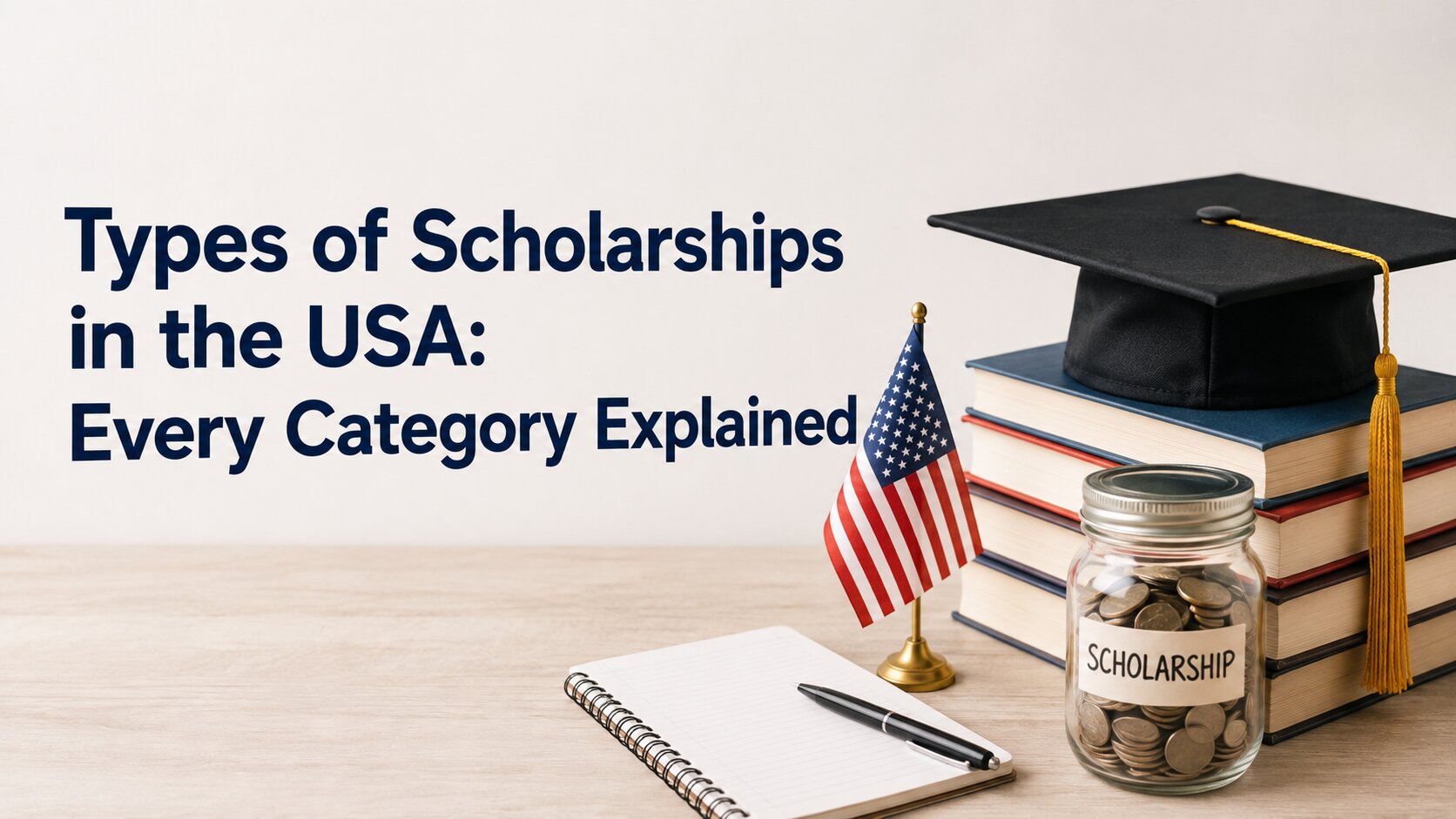
Finding the right scholarship starts with understanding what types of scholarships exist and which ones you actually qualify for. The United States has one of the most diverse scholarship ecosystems in the world, with funding available across dozens of categories based on academic performance, financial need, background, field of study, and circumstances that most students never think to check.
This guide answers the most common questions about scholarship types in the USA, structured so that each question and answer stands alone as a clear, searchable resource.
What Are the Main Types of Scholarships in the USA?
The main types of scholarships in the USA are merit-based scholarships, need-based scholarships, athletic scholarships, subject-specific scholarships, minority scholarships, community scholarships, and employer scholarships. Each type uses different eligibility criteria and is funded by different organizations. Most students qualify for more than one type simultaneously.

What Is a Merit-Based Scholarship?
A merit-based scholarship is awarded based on academic achievement, test scores, leadership, or demonstrated talent rather than financial need. Merit scholarships are offered by universities, private foundations, and corporations. Common examples include the National Merit Scholarship, university presidential scholarships, and departmental honors awards.
Merit scholarships often require a minimum GPA, standardized test scores above a certain threshold, or demonstrated achievement in a specific area such as music, research, or community leadership. They do not require applicants to demonstrate financial hardship, which means students from any income level can qualify.
Merit-based scholarships are among the most competitive scholarship types because eligibility is open to all students who meet the academic criteria, regardless of background or circumstance.
What Is a Need-Based Scholarship?
A need-based scholarship is awarded based on demonstrated financial need rather than academic performance. Eligibility is typically determined through the FAFSA (Free Application for Federal Student Aid), which calculates a student's Expected Family Contribution based on household income and assets.
Need-based scholarships are funded by the federal government, state governments, individual universities, and private foundations. The Federal Pell Grant is the largest need-based aid program in the United States, providing funding to undergraduate students from low-income households.
Students can qualify for need-based scholarships regardless of their GPA, major, or extracurricular activities. The primary factor is financial need as documented through official financial aid applications. Many need-based scholarships also consider the cost of the institution the student attends, since need is relative to the price of attendance.
What Is an Athletic Scholarship?
An athletic scholarship is awarded to student athletes based on their performance and potential in a sport. Athletic scholarships in the USA are primarily administered through the National Collegiate Athletic Association (NCAA) and the National Association of Intercollegiate Athletics (NAIA).
NCAA Division I and Division II schools offer athletic scholarships that can cover full or partial tuition, room and board, and other educational expenses. NCAA Division III schools do not offer athletic scholarships but do offer need-based and merit-based aid to athletes.
Athletic scholarships are among the most competitive scholarship types because they require demonstrated athletic ability at a high level in addition to academic eligibility. Recipients must maintain both academic standing and athletic performance to retain their scholarship across their collegiate career.
Not all sports offer the same number of scholarships. Football and basketball programs at Division I schools offer more scholarships than programs in most other sports, and the level of scholarship funding varies significantly by school and division.
What Is a Subject-Specific or Major-Specific Scholarship?
A subject-specific scholarship is awarded to students pursuing a particular field of study. These scholarships are funded by professional associations, corporations, government agencies, and private foundations that have an interest in supporting talent in a specific field.
Common subject-specific scholarship categories include STEM scholarships for students in science, technology, engineering, and mathematics; healthcare scholarships for students in nursing, medicine, or public health; education scholarships for students planning to teach; and business scholarships for students in finance, accounting, or entrepreneurship.
Subject-specific scholarships are often less competitive than general scholarships because eligibility is restricted to students in a particular major or career path, which significantly reduces the size of the eligible applicant pool. A scholarship from an engineering professional association that is restricted to civil engineering students in their junior year receives far fewer applications than a general academic merit scholarship open to all majors.
Students who search specifically for scholarships in their intended field of study, rather than applying only to general scholarships, consistently find more funding with better odds of success. Listscholarship.com allows filtering by field of study, making subject-specific scholarship searches more efficient than broad keyword searches.
What Are Minority Scholarships?
Minority scholarships are awarded to students from historically underrepresented groups in higher education. In the United States, minority scholarships commonly support Black and African American students, Hispanic and Latino students, Native American and Indigenous students, Asian American students, and students from other groups that are statistically underrepresented at the college and graduate level.
Minority scholarships are funded by a wide range of organizations including civil rights foundations, corporate diversity initiatives, government programs, and community organizations. Examples include the United Negro College Fund (UNCF) scholarships, the Hispanic Scholarship Fund, and the American Indian College Fund.
Eligibility criteria vary significantly across minority scholarship programs. Some require documentation of ethnic or tribal heritage. Others are open to students who demonstrate involvement in community or advocacy work related to their background. Some programs focus on financial need alongside demographic eligibility, while others are purely merit-based within the eligible group.

What Are Community or Local Scholarships?
Community scholarships are funded by local organizations, businesses, community foundations, and civic groups to support students from a specific geographic area. Eligibility is typically restricted to students who live in or graduated from a high school in a particular city, county, or region.
Community scholarships are among the least competitive scholarship types because geographic eligibility restrictions dramatically reduce the applicant pool. A scholarship from a county community foundation that is only open to residents of that county competes among dozens of applicants rather than thousands.
Sources of community scholarships include community foundations, Rotary Clubs, Lions Clubs, Kiwanis organizations, local chambers of commerce, memorial funds established by local families, and regional credit unions and banks. These scholarships are often not listed on national scholarship databases and require direct outreach to local organizations or a search of local community foundation websites.

What Are Employer Scholarships?
Employer scholarships are funded by companies for their employees or the children of their employees. Both part-time and full-time employees at many major employers are eligible for scholarship funding that is entirely separate from any other financial aid.
Major employers that offer employee scholarship programs include Target, McDonald's, Starbucks, Walmart, UPS, and many regional businesses. Employer scholarship programs typically require a minimum number of hours worked per week, a minimum GPA, and enrollment at an accredited institution.
Children of employees also qualify for scholarship funding at many companies. These programs are administered through the company's HR department or corporate foundation and are often not widely advertised to employees, which means they receive fewer applications than their award amounts would suggest.
Checking with an employer's HR department directly is the most reliable way to identify whether an employer scholarship exists and what the eligibility requirements are.
What Are Government Scholarships in the USA?
Government scholarships in the USA are funded at the federal and state levels to support students in higher education. Federal government scholarships include the Pell Grant for need-based aid, the TEACH Grant for students planning to teach in low-income schools, and various scholarships administered through federal agencies including NOAA, NASA, the Department of Defense, and the National Institutes of Health.
State government scholarships vary by state and are typically restricted to residents of that state who attend an in-state institution. Common state scholarship types include state merit scholarships based on high school GPA and test scores, state need-based grants, and specialized programs for students entering high-demand fields such as teaching, nursing, or public service.
The FAFSA is the required application for most federal and state need-based aid programs. Completing the FAFSA as early as possible after October 1 each year maximizes eligibility for government scholarship and grant programs that operate on a first-come, first-served basis within their funding pools.
Can Students Qualify for More Than One Type of Scholarship?
Yes. Students can and often should apply for multiple types of scholarships simultaneously. A student can hold a merit scholarship from their university, a need-based grant from the federal government, a subject-specific scholarship from a professional association in their field, and a community scholarship from a local foundation at the same time, provided each scholarship's terms allow stacking.
Most scholarships do not prohibit recipients from holding other scholarships simultaneously. Some institutional scholarships have maximum award amounts that adjust when combined with other funding sources, and students receiving significant aid should notify their financial aid office of any external scholarships received to ensure proper coordination.
Building a scholarship portfolio across multiple types produces more total funding than focusing exclusively on one category, and it distributes application risk across multiple eligibility criteria rather than depending on a single type of award.
For updated listings across every type of scholarship in the USA, including merit-based, need-based, minority, subject-specific, and local awards filtered by eligibility and deadline, visit listscholarship.com.