
Japan's scholarship system for international students is more layered and more accessible than most applicants realize, but it operates on a logic that takes time to understand. The confusion usually starts with MEXT, the Japanese government scholarship that most people encounter first in a search. MEXT is real, significant, and genuinely worth pursuing. It is also not the only path to funded study in Japan, and for many international students it is not even the most accessible path.
This guide maps every major type of scholarship available to international students in Japan, explains the mechanism behind each one, provides the specific amounts and eligibility criteria that matter for 2027 planning, and addresses the timing logic of Japan's scholarship calendar, which runs on a fiscal year beginning in April rather than the September or October start that most Western-oriented students expect.
Understanding the full map before you focus on any single program is what converts a scholarship search in Japan from an exercise in MEXT-or-nothing thinking into a realistic funding strategy.
The Japanese Academic Calendar and Why It Changes Everything
Before mapping the scholarship types, one structural fact about Japan's education system shapes everything that follows. Japan's academic year begins in April, not September. This means that scholarship applications for enrollment beginning in April 2027 open significantly earlier than scholarship applications for Western universities starting in September 2027, and the preparation timeline differs accordingly.
Some Japanese universities have introduced October intake programs specifically to attract international students who are accustomed to September starts, and scholarships for these programs operate on a different cycle. But the majority of Japanese university programs and the majority of Japanese scholarship programs still run on the April academic year, which means a student planning to enroll in April 2027 should begin scholarship applications in 2026, in some cases more than a year before enrollment.
Knowing which intake you are targeting determines which scholarship application windows apply to you. This guide notes timing differences where they are significant for specific programs.
Layer 1: MEXT Scholarships — The Japanese Government's Primary International Program
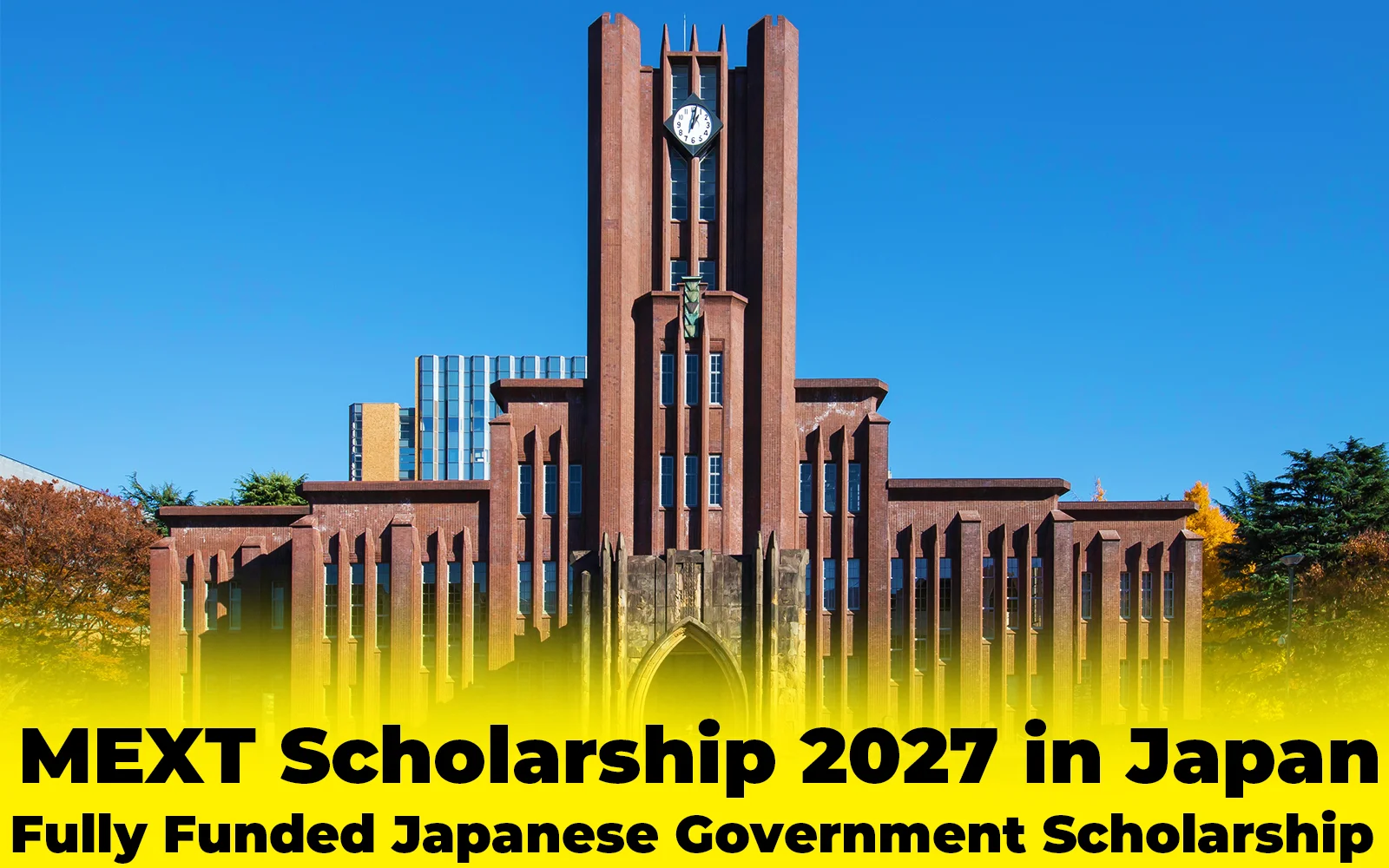
The Ministry of Education, Culture, Sports, Science and Technology, universally abbreviated as MEXT, administers Japan's flagship scholarship program for international students. MEXT scholarships are the most well-known Japanese government scholarships internationally and the ones most international students encounter first in a search. They are fully funded, prestigious, and genuinely competitive.
What MEXT Actually Covers
A MEXT scholarship covers tuition fees at the host Japanese institution, a monthly stipend, and a return airfare allowance. The monthly stipend varies by degree level: research students (pre-degree language and research preparation) receive approximately 143,000 yen per month, undergraduate students receive approximately 117,000 yen, master's students receive approximately 144,000 yen, and doctoral students receive approximately 145,000 yen. These amounts are indexed and subject to annual adjustment.
The scholarship duration covers the full degree program plus, in many cases, an initial period of Japanese language study before the academic program begins, which is a significant benefit for students who do not yet have Japanese proficiency at the level their program requires.
The Two Application Routes for MEXT
This is the distinction most applicants miss entirely. MEXT scholarships have two application routes with different processes, different competitive pools, and different timelines.
The Embassy Recommendation route involves applying through the Japanese Embassy or Consulate in your home country. The Embassy screens and nominates applicants, and the competition is national: you are competing against all other applicants from your country who applied through the same Embassy in the same cycle. Successful nominees are then forwarded to Japanese universities for placement. This route is the one most commonly described in general scholarship guides and the one with the most recognizable application process.
The University Recommendation route involves being nominated directly by a Japanese university with MEXT scholarship quota allocation. Under this route, you first secure admission and scholarship nomination from a Japanese university, and the university then recommends you to MEXT for final approval. This route requires securing the university relationship first, which means identifying a supervisor or department willing to support your application before the MEXT process begins.
For prospective graduate researchers, the University Recommendation route is often more accessible than the Embassy route because the competitive pool is smaller and because a strong supervisor relationship provides an advocate within the process. For undergraduate applicants, the Embassy route is typically the primary option.
MEXT for 2027: Timing and Application
For April 2027 enrollment, MEXT Embassy Recommendation applications typically open in April or May 2026 and close within four to six weeks. The selection process runs through the remainder of 2026, with results announced and placement at Japanese universities confirmed in early 2027. This timeline means that MEXT applicants for April 2027 enrollment need to begin their preparation, including identifying target universities and supervisors, well before the Embassy application opens.
Layer 2: JASSO Scholarships — The Underused Alternative
The Japan Student Services Organization, known as JASSO, administers several scholarship programs for international students in Japan that receive significantly less international attention than MEXT but represent accessible and meaningful funding for students who qualify.
JASSO Honors Scholarship for Privately-Financed International Students
This is the primary JASSO scholarship for international students who are studying in Japan under their own funding rather than through a government scholarship. It provides 48,000 yen per month to eligible students and is applied for after arrival in Japan through the host institution rather than before departure from the home country.
The application process runs through the Japanese university the student is enrolled in, which screens and nominates eligible students to JASSO. Eligibility requires demonstrated academic performance at the Japanese institution, which means this scholarship is available to students who have already begun their studies in Japan rather than those who are still in the pre-enrollment stage.
The practical implication: JASSO's Honors Scholarship is a scholarship that students can access after arriving in Japan on their own funding, making it a meaningful supplement for students who could not secure pre-departure scholarship funding but who perform well academically once enrolled.
JASSO Short-Term Study Abroad Support Program
For students participating in exchange programs at Japanese universities, JASSO administers a short-term scholarship for exchange students of up to 80,000 yen per month for the duration of the exchange period. This scholarship is administered through bilateral exchange agreements between Japanese universities and partner institutions abroad. Students at universities with Japanese partner institutions should check with their home institution's international office whether exchange students are eligible for JASSO support through the partnership.
Layer 3: University Scholarships in Japan
Individual Japanese universities administer their own scholarship programs for international students, separate from MEXT and JASSO. These programs vary significantly in coverage, amount, and eligibility across institutions, but collectively represent a substantial scholarship pool that many international students do not systematically search before applying.

Institutional Merit Scholarships
Major Japanese universities including the University of Tokyo, Kyoto University, Osaka University, Tohoku University, and the Tokyo Institute of Technology all administer institutional scholarship programs for international students that provide monthly stipends, tuition reductions, or both. These programs are typically competitive and based on academic merit, and they are administered through the university's international student support office.
The University of Tokyo's MERIT Scholarship, Kyoto University's scholarship programs administered through the Kyoto University Foundation, and Waseda University's scholarships for international students are among the more recognized institutional programs, but comparable programs exist at most research universities in Japan.
Private University Scholarships
Japan's private universities, which include Waseda, Keio, Ritsumeikan, Doshisha, and Sophia, administer their own scholarship programs independently of government programs. Private university scholarships in Japan sometimes cover tuition fees, sometimes provide monthly stipends, and sometimes do both, depending on the specific program. Private universities often have more flexible eligibility criteria than national university programs and may provide scholarships for students studying in English-medium programs, making them accessible to students who have not yet acquired Japanese language proficiency.
The Scholarship Search Process at Japanese Universities
Finding university-level scholarships in Japan requires a different approach from Western scholarship searching. Japanese university scholarship databases are not always comprehensively translated into English, and some scholarship programs are announced only in Japanese through institutional channels. Students who are applying to Japanese universities should make direct contact with the international student office of each target institution and ask specifically about scholarship programs available to international students at their intended level of study. This inquiry, made before or during the application process, frequently surfaces programs that do not appear in English-language scholarship databases.
Layer 4: Private Scholarships in Japan
Japan has a substantial private scholarship sector funded by corporations, foundations, and cultural organizations. Private scholarships in Japan are administered by entities including the Rotary Yoneyama Memorial Foundation, the Mitsui Bussan Scholarship Foundation, the Honjo International Scholarship Foundation, the Okazaki Kaheita International Scholarship Foundation, and dozens of smaller foundations with more specific eligibility criteria.
Characteristics of Japanese Private Scholarships
Japanese private scholarships share several characteristics that distinguish them from equivalent programs in other countries. Most require applicants to already be residing in Japan, which means they are not pre-departure scholarships but rather support programs accessible to students who are already enrolled at a Japanese institution. Many require applicants to demonstrate genuine commitment to Japan-related fields of study or to relationships between Japan and the applicant's home country. And many include an interview component conducted in Japanese, which effectively sets a practical Japanese language threshold even where formal language requirements are not stated.
The Rotary Yoneyama Memorial Foundation is one of the larger private scholarship providers, offering monthly stipends to students at Japanese universities with a particular emphasis on international understanding and cross-cultural engagement. The Mitsui Bussan Scholarship Foundation focuses on students from developing countries in Asia pursuing graduate study in Japan, with a selection process that includes both academic review and interviews.
How to Find Private Scholarships in Japan After Arrival
The most productive approach to Japanese private scholarships for students who are already in Japan is through the host university's scholarship information bulletin board, which in Japanese universities is often a physical notice board in the international student center or student affairs office rather than a digital database. Checking this resource regularly at the start of each academic semester, and specifically asking the international student office whether any private scholarship applications are currently open, is the most reliable way to identify relevant opportunities in real time.
Layer 5: Prefectural and Local Government Scholarships
Japan's prefectural governments and some major cities administer their own scholarship programs for international students studying at institutions within their jurisdiction. These programs are smaller than national programs and are funded by local government budgets, but they represent accessible funding with limited competition because eligibility is restricted by geography.
Tokyo Metropolitan Government, Osaka Prefecture, Aichi Prefecture, and several other major jurisdictions administer prefectural scholarships for international students. Eligibility typically requires enrollment at a university within the prefecture and compliance with residency registration requirements. Monthly amounts are generally modest, in the range of 30,000 to 60,000 yen, but they supplement other scholarship funding meaningfully for students whose primary award does not fully cover living costs in Japan's more expensive cities.
Finding prefectural scholarships requires either direct inquiry to the prefectural government's education department or to the host university's international student office, which typically maintains information about local and prefectural funding available to its enrolled students.
Building Your 2027 Japan Scholarship Strategy
A realistic Japan scholarship strategy for 2027 combines applications across multiple layers rather than relying on MEXT alone.
Begin with MEXT. For April 2027 enrollment, the Embassy Recommendation application opens in April or May 2026. If you have already identified a Japanese university and supervisor, contact the university's international office about the University Recommendation route simultaneously. These two routes can be pursued in parallel without conflict.
While the MEXT process is underway, research institutional scholarships at your target Japanese universities. Contact international student offices directly and ask about scholarship programs available at your level of study.
After arriving in Japan, apply for JASSO's Honors Scholarship through your host institution at the first available application cycle. Research private scholarships through the university's scholarship information resources and submit applications to every program for which you are eligible.
Check prefectural scholarship availability through your host university's international student office at the start of each academic year.
For updated scholarship listings for Japan including MEXT, JASSO, university, and private awards filtered by study level and 2027 application deadlines, visit listscholarship.com.