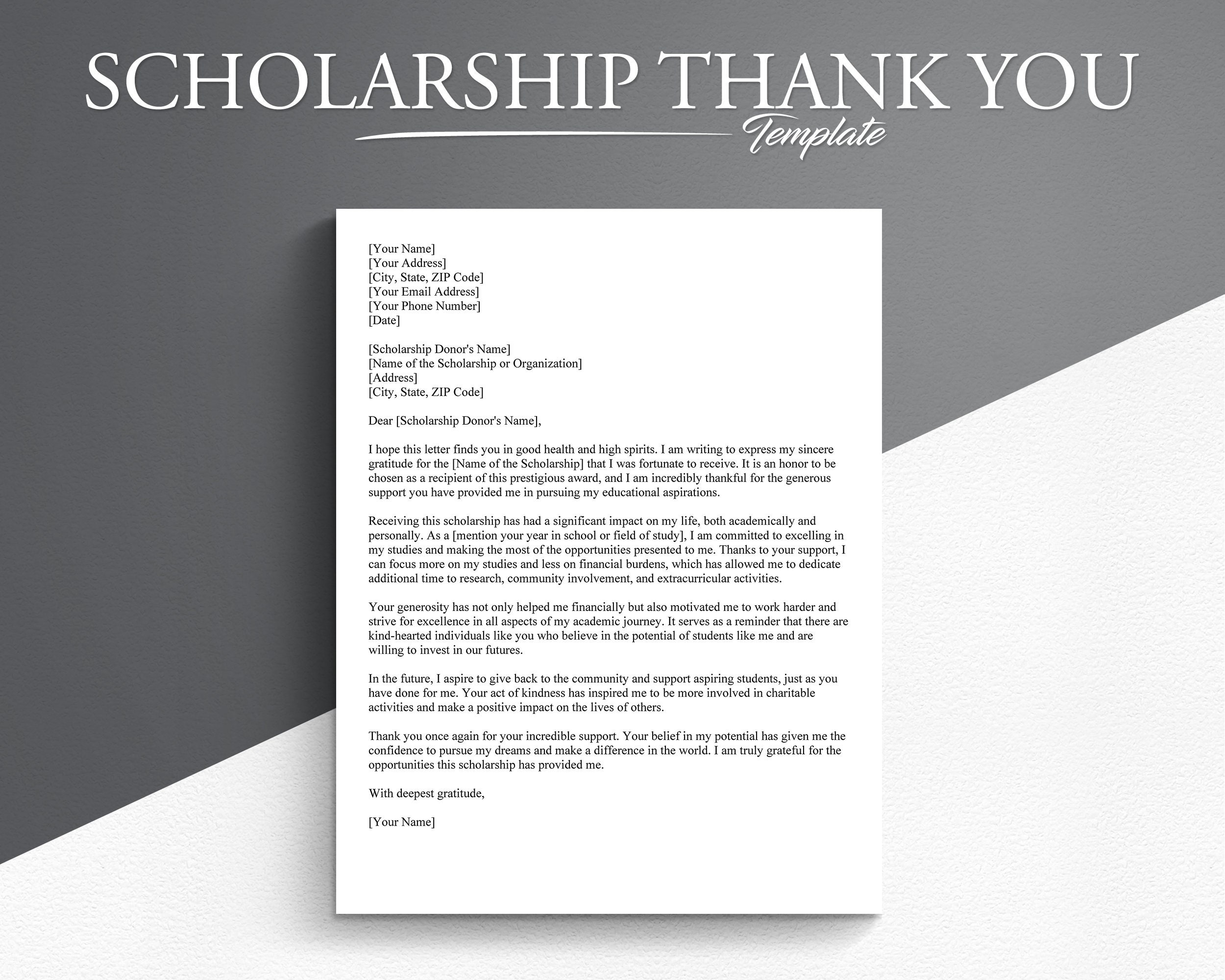
There are two ways to learn how to write a scholarship thank you letter. The first is to read a list of tips and then try to apply them to a blank page. The second is to read a complete, working example and understand exactly why each decision was made.
This guide takes the second approach. Below is a full scholarship thank you letter written as a real recipient might send it, followed by a detailed annotation of every paragraph explaining the specific writing choices at work. Read the letter first without interruption. Then read the annotations to understand the mechanics behind it.
By the end, you will have a complete mental model of what a strong scholarship thank you letter looks like, why it works, and how to adapt it to your own situation without producing a copy that reads like a template.

The Complete Letter
Read this in full before moving to the annotations.
[Your Full Name] [Your Address] [City, State, ZIP] [Date]
[Donor Name or Committee Name] [Organization Name] [Organization Address]
Dear [Donor Name / Scholarship Committee],
I am a second-year undergraduate student studying environmental engineering at [University Name], and I received notification last month that I had been selected for the [Scholarship Name]. I wanted to write to you directly rather than respond only through the financial aid office, because what this award made possible deserves more than a form acknowledgment.
This semester, the scholarship covered the cost of a field research unit that would otherwise have been out of reach. The unit takes a small cohort of students to the [specific location] for two weeks to collect soil and water samples for ongoing climate resilience research. I had already begun the paperwork to withdraw from the unit when the scholarship notification arrived. I re-enrolled the same afternoon.
I also want to say something about the name this scholarship carries. I looked up [Donor Name or the person the scholarship honors] after receiving the award letter, and I read about [one specific thing you found, such as their research, their career, their community work]. I did not expect to spend an afternoon reading about someone I had never heard of before, but I did. That context made the award feel less like a financial transaction and more like an introduction.
I am on track to complete my undergraduate degree in [year]. My current research focus is [brief, specific description], and my advisor believes the field data I will collect this semester has potential for a conference presentation in [year or general timeframe]. I will send you an update when that moves forward, if you are open to hearing it.
Thank you for funding a scholarship that reached a student who needed it at the exact moment it mattered. I do not take that timing for granted.
Sincerely,
[Your Full Name] [Your Degree Program and Year] [University Name] [Email Address]
Annotation: Why Each Part of This Letter Works
Now that you have read the letter as a whole, here is a paragraph-by-paragraph breakdown of the specific decisions that make it effective.
Paragraph 1: The Opening
What the letter says: Introduction of who the writer is, confirmation of the award, and an explanation of why the letter exists at all.
Why it works: The first sentence establishes identity immediately without wasting space on pleasantries. Donors and committee members who receive multiple thank you letters appreciate knowing who is writing before being asked to feel anything about it. The phrase "I wanted to write to you directly rather than respond only through the financial aid office" does two things at once: it signals that this letter is a deliberate act rather than a required formality, and it subtly acknowledges that the recipient knows thank you letters are sometimes a procedural expectation rather than a genuine choice.
What it avoids: The letter does not open with "I am writing to express my sincere gratitude." That construction tells the reader nothing before asking them to register a feeling. Starting with identity and context is more respectful of the reader's time and more credible as a result.
Paragraph 2: The Specific Use of the Funding
What the letter says: Exactly what the scholarship paid for, with a specific outcome attached, including the detail that the writer had already begun withdrawing from the relevant program before the award arrived.
Why it works: This is the most important paragraph in the letter, and it is the one most recipients write most weakly. The detail about withdrawing and then re-enrolling "the same afternoon" is the kind of specific timeline that makes a story credible. It is impossible to fabricate convincingly, which is why it reads as true even to a reader who has no way to verify it. Donors fund scholarships because they want to change outcomes for students. Showing the donor the exact moment the outcome changed is the most direct form of gratitude available.
What it avoids: The paragraph does not say "this scholarship will help me pursue my educational goals" or "without support like yours it would be much harder." Both of those sentences are true for every scholarship recipient, which is exactly why they communicate nothing.
Paragraph 3: The Personal Connection to the Scholarship's History
What the letter says: The recipient looked up the person or organization behind the scholarship and found something specific enough to spend time reading about.
Why it works: This paragraph does something most thank you letters never attempt: it shows the donor that the recipient treated the scholarship as more than a financial transaction. The specific phrase "I did not expect to spend an afternoon reading about someone I had never heard of before, but I did" is effective precisely because it is honest about the unexpectedness of the experience. It does not claim the recipient had always known about the donor's work. It describes what actually happened when a curious person received an award and followed their curiosity.
What it avoids: It does not say "I am familiar with your organization's mission and deeply admire the work you do." That construction is so commonly used in both scholarship essays and thank you letters that it has lost all meaning. Showing genuine research is the only replacement that works.
Practical note for writing your own version: You do not need to have discovered something profound. You need to have found something specific and real. A publication, a community project, a career detail, a news article. The specificity matters more than the significance.
Paragraph 4: The Forward-Looking Close
What the letter says: A concrete update on academic trajectory, a specific research focus, a realistic timeline for a future milestone, and an implicit invitation for ongoing contact.
Why it works: Most thank you letters end with a promise to work hard and make the donor proud. That kind of close is a dead end: it gives the donor nothing to look forward to and no way to stay connected to the outcome their funding produced. This paragraph ends differently. It offers a specific milestone, states a realistic timeframe, and asks for permission to send an update. That last element converts the letter from a one-time communication into the opening of a relationship.
The phrase "if you are open to hearing it" is deliberately understated. It does not assume the donor wants to maintain contact. It offers the option without pressure, which is exactly the right tone for a first letter to someone the recipient has never met.
What it avoids: The close does not include "I hope to give back to my community someday" or "I will pay it forward." Both are genuine sentiments that read as filler in this context because they are impossible to verify and require no knowledge of the recipient's actual plans to write.
The Final Sentence
What the letter says: "Thank you for funding a scholarship that reached a student who needed it at the exact moment it mattered. I do not take that timing for granted."
Why it works: The final sentence of a thank you letter should do one thing: leave the reader with something they will remember after they put the letter down. This sentence is short and specific enough to be quotable. The phrase "at the exact moment it mattered" references the re-enrollment story from paragraph two without repeating it, which rewards the reader for having read the whole letter. The final sentence "I do not take that timing for granted" closes on a note of awareness rather than obligation.
What it avoids: It does not close with "thank you again for your generosity and support." That construction appears at the end of nearly every scholarship thank you letter written. Ending on a generic phrase after three or four specific paragraphs weakens the entire letter's impact.

Adapting This Letter to Your Own Situation
The letter above was written for a specific fictional recipient in a specific situation. Your situation is different, and the letter you write should reflect that. Here is how to adapt each component.
Paragraph 1 changes based on your year of study, your field, and the scholarship you received. The core structure stays the same: who you are, what you received, and why you are writing personally rather than procedurally.
Paragraph 2 changes based on what the scholarship actually made possible for you. If the scholarship covered tuition rather than a specific program cost, describe the specific decision it changed: a course you registered for, a job you did not need to take, a housing situation it stabilized. The more specific the better.
Paragraph 3 changes based on what you actually find when you research the scholarship's history. If the scholarship is funded by a living donor, research their career or their organization. If it is a memorial scholarship, read about the person it honors. If it is an institutional award with no named donor, research the founding purpose or the history of the program. Find one specific thing and write about that one thing.
Paragraph 4 changes based on your actual academic trajectory. Use your real timeline, your actual research focus, and a genuine upcoming milestone. Fabricated specificity is readable and counterproductive.
The One Revision Habit That Improves Every Draft
After writing your first draft, read each sentence and ask: could this sentence appear in a letter from a different recipient without changing a word?
Every sentence that passes that test is a sentence worth rewriting. The target is a letter where every paragraph contains at least one sentence that is specific enough to be impossible for anyone else to write.
That standard produces the kind of scholarship thank you letter that a donor reads once and keeps.
For updated scholarship listings and application resources, visit listscholarship.com.