


All Related Scholarships & Support Programs Provided at www.sxcran.org
Scholarship details and scholarship-gaining assists are given
Visit site: www.sxcran.org
Scholarship Support
HVAC Programs For Veterans: 2025 Guide To Free Training
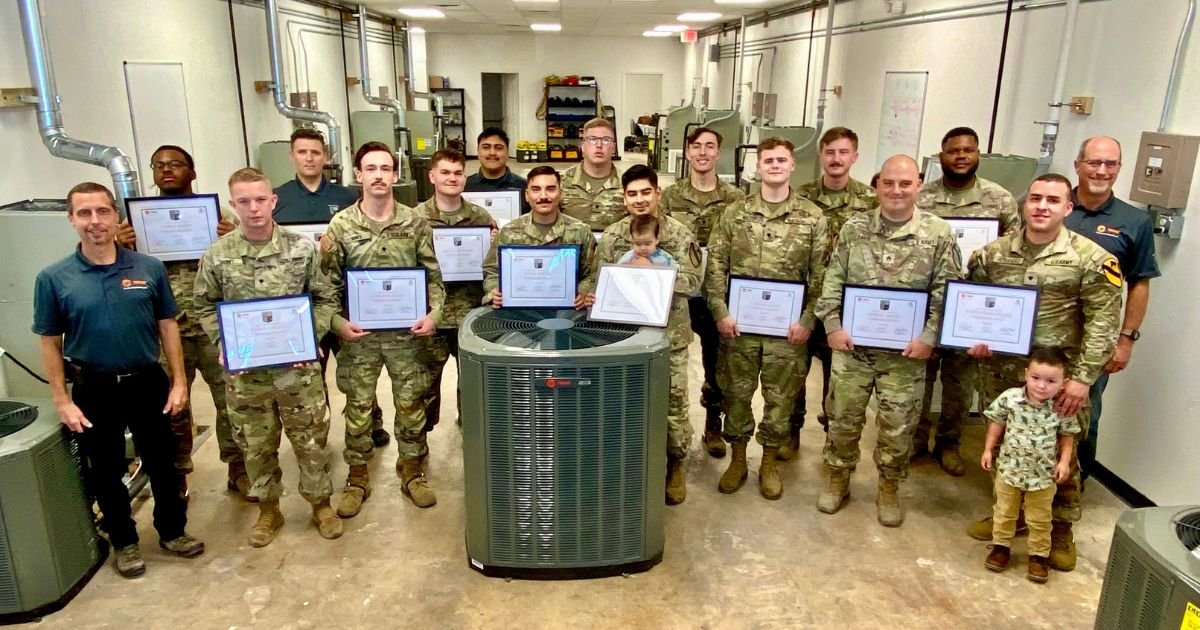
Veterans, you've served your country with honor and discipline—now it's time to channel those skills into a rewarding civilian career. The keyword "free HVAC training for veterans" is your entry point to a booming trade that values your work ethic and problem-solving abilities. In 2025, with the U.S. Bureau of Labor Statistics projecting 37,700 new HVAC jobs annually through 2032 and salaries averaging $59,000, HVAC programs for veterans and HVAC jobs for veterans offer stability, growth, and respect. From hands-on HVAC training and HVAC courses to entry-level roles, this 1,200-word guide explores free training options, eligibility, application tips, and success stories. Backed by VA, NCCER, and industry data, it's your roadmap to transitioning from service to a fulfilling HVAC job. The Appeal of HVAC Careers for Veterans in 2025 Why HVAC Suits Veterans Your military background—discipline, teamwork, and technical aptitude—translates seamlessly to HVAC. Installing, repairing, and maintaining heating, ventilation, air conditioning, and refrigeration systems demands precision and reliability, qualities honed in service. In 2025, the green energy boom (e.g., heat pumps) creates 40% more eco-focused roles, aligning with veterans' problem-solving skills. Job Market and Pay The BLS forecasts 6% growth in HVAC jobs for veterans, adding 200,000 positions by 2030. Entry-level techs earn $45,000–$55,000, scaling to $70,000+ with certifications like EPA 608 or NATE. Top earners in urban areas hit $80,000. Unlike volatile fields, HVAC offers 95% job security, with 60% of roles in residential/commercial sectors. Transition Benefits HVAC programs for veterans leverage GI Bill funding, covering 100% of tuition. In 2025, 70% of veterans in HVAC training complete programs in 6–12 months, per VA data. Top Free HVAC Training for Veterans in 2025 VA GI Bill for HVAC Training The Post-9/11 GI Bill covers 100% of tuition, fees, and a $1,500 monthly housing allowance for approved HVAC programs. Eligibility: 90+ days of active duty post-9/11, honorable discharge. In 2025, it funds 50,000 veterans in trades, with HVAC courses at community colleges like Tulsa Welding School ($15,000 value). Apply at va.gov; processing takes 30 days. HVAC Excellence Scholarship Program HVAC Excellence awards $1,000–$5,000 to veterans in certified programs. Eligibility: VA-approved school enrollment, 3.0 GPA. Deadline: April 30, 2025. Apply at hvacecellence.org; 200 scholarships yearly, with 85% recipients advancing to journeyman roles. SkillsUSA Veterans Scholarship SkillsUSA offers $2,000–$5,000 for veterans in HVAC or trades. Eligibility: SkillsUSA member ($12/year), enrolled in program. Deadline: March 15, 2025. Apply at skillsusa.org; 150 awards, 90% leading to HVAC jobs for veterans. Workforce Innovation and Opportunity Act (WIOA) WIOA provides free HVAC training for unemployed veterans, covering tuition and tools. In 2025, $1.5 billion funds 100,000 trainees. Eligibility: Unemployed, low-income. Apply via local workforce centers; 80% completion rate. Trade Adjustment Assistance (TAA) for Veterans TAA covers 100% of training for veterans impacted by trade shifts. Eligibility: Laid-off from trade-affected jobs. In 2025, it supports 20,000 veterans in HVAC courses. Apply at dol.gov; funds disbursed in 2–4 weeks. Eligibility for Free HVAC Training for Veterans U.S. veteran status (DD-214 form). Honorable discharge. Enrollment in VA-approved or accredited programs. Financial need for some (e.g., WIOA, income <200% poverty level). Commitment to complete training (90% retention required). HVAC courses like certificates (6–12 months) or associates (2 years) qualify. Application Tips for HVAC Scholarships Start Early: Deadlines cluster in March–May; prepare 3 months ahead. Craft a Strong Essay: Highlight military skills and HVAC passion; 70% of awards prioritize stories. Gather Documents: DD-214, transcripts, proof of enrollment, income statements. Join Organizations: NCCER or SkillsUSA membership ($50/year) boosts visibility. Apply Broadly: Target 10–15 scholarships; stack non-exclusive awards. Leverage Veteran Status: Programs like HVAC Excellence prioritize vets, with 50% funding increase in 2025. A 2025 VA report shows complete applications have 60% higher success rates. Costs of HVAC Training and How Scholarships Help Certificate Programs: $3,000–$8,000 (6–12 months). Associate Degrees: $8,000–$15,000 (2 years). Apprenticeships: Free (paid training, 4 years, $20–$30/hour). Additional costs: Tools ($500), exams ($300), medicals ($200). HVAC scholarships cover 30–100% of costs, with GI Bill funding 100% for eligible veterans. Choosing the Right HVAC Program Accreditation: NCCER or ACCSC for quality. Format: In-person for hands-on (70% of programs), online for flexibility (30%). Curriculum: EPA 608, electrical, refrigeration. Placement: 90%+ job placement. Cost: Public colleges save 20%. Top programs: Tulsa Welding School (7 months, $15,000), Penn Foster Online ($999), Pittsburgh Technical College (18 months, $12,000). Challenges and Solutions for Veterans Transition: 30% struggle with civilian jobs. Solution: HVAC programs for veterans like WIOA offer resume help. Access: Rural areas have 20% fewer schools. Solution: Online courses and mobile training. Funding: 15% miss grants due to awareness. Solution: VA.gov and nccer.org resources. Time: Full-time programs demand 40 hours/week. Solution: Apprenticeships for paid learning. Success Stories Maria: GI Bill funded her HVAC certificate; now a $60,000 tech role. Jamal: HVAC Excellence’s $5,000 scholarship led to a commercial HVAC job at $75,000. Sophia: WIOA grant covered her associate degree, securing a $55,000 apprenticeship. The Future of HVAC for Veterans in 2025 In 2025, government grants for HVAC training total $1.5 billion, with 25% more awards for veterans. AI tools on nccer.org match vets to programs 30% faster. By 2030, 60% of HVAC techs may be veterans, per BLS. Practical Steps to Start Research Programs: Compare Tulsa Welding or Penn Foster via nccer.org. Apply for GI Bill: Submit at va.gov for 100% coverage. Gather Documents: DD-214, transcripts, income proof. Get Certified: Complete EPA 608 exam ($100). Network: Join ACCA or SkillsUSA for job leads. Conclusion: Launch Your HVAC Career as a Veteran Free HVAC training for veterans in 2025, through HVAC programs for veterans and HVAC jobs for veterans, honors your service with a stable career. From GI Bill coverage to SkillsUSA scholarships, opportunities abound. Apply early, leverage your experience, and visit online platforms for resources. Your HVAC journey starts now—build a future of success and stability.
Read More
How To Pay For College During The COVID Pandemic
Many students are reconsidering their higher education plans as a result of COVID-19's terrible economic impact. According to a recent survey, four-year universities may see enrollment losses as a result of the coronavirus pandemic, as 13 percent of college students consider dropping out. While safety is a key concern, college costs also have an impact on admissions and student enrolment. One of the most significant concerns with financial aid is the information you must give on the Free Application for Federal Student Aid (FAFSA) (FAFSA). The FAFSA uses financial information from two years ago to calculate your financial aid package – the 2020-2021 FAFSA requires applicants to provide information from their 2018 tax returns — which is often out of current for borrowers, especially in light of the coronavirus outbreak. Here are seven methods to receive the money you need for school if you are suffering to pay for college due to the COVID-19 pandemic. 1. Appeal Your Financial Aid Decision If your financial status has changed significantly since last year, you might be eligible for greater federal aid this year. If you or your parents lost their jobs, experienced big medical bills, lost a parent, or had another event that significantly affected your household income, you can file a financial assistance appeal to obtain greater support. Many students may be able to appeal their financial aid awards because of the coronavirus outbreak, which resulted in millions of people losing their employment. Inquire about the appeals process through your school's financial assistance office. The procedure varies by school; some enable you to send a letter explaining your condition, while others need you to fill out specific documents. When appealing a financial aid decision, you should do so as quickly as possible to increase your chances of receiving more funding. Additional grants and awards may be available at schools, but they are frequently granted on a first-come, first-served basis. 2. Apply for Federal COVID-19 Emergency Grants The federal government granted financing to universities and colleges under the Coronavirus Aid, Support, and Economic Security Act, popularly known as the CARES Act, to provide emergency relief to students afflicted by the pandemic. If you qualify for a grant, you can use the funds to cover necessities like food, housing, course materials, healthcare, and child care. The money do not have to be repaid because they are a grant – a type of gift aid. Directly applying for a grant from the US Department of Education is not possible. Instead, inquire about available grants and federal financial help at your school's financial aid office. Because each school sets its own eligibility requirements and award levels, a financial aid specialist can explain how to apply and how much you might be eligible for. 3. Work Remotely Working and earning money while in school can help you pay for your education while also gaining useful experience and expanding your professional network. While work-study, retail, and food-service positions on campus may be curtailed as a result of the epidemic, you can still earn money from home. For instance, here are some alternative ways you might earn money off-campus to assist pay for college tuition: Deliveries of groceries Transcription via the internet Tutoring over the internet Sitting for pets Management of social media Work as a virtual assistant Customer service via the internet You may choose your own schedule and work when it's convenient for you with these types of jobs. Using your wages to cover a portion of your education costs can help you avoid needing financial aid or incurring student loan debt. 4. Ask for Emergency Assistance Some colleges have their own emergency aid programmes for students who are struggling financially. The University of Central Florida, for example, enabled students to postpone tuition and housing payments until later in the semester. In addition, the public university established a Short Term Advance programme, in which students could get up to $600 in financial aid to purchase textbooks and materials. If you can't afford your accommodation, textbooks, or other expenses, go to the financial aid office or the office of residence life before returning to school; you could be eligible for assistance. 5. Search for Scholarship Opportunities You can apply for scholarships while still in school, and you can even apply for scholarships and get financial help in the middle of the semester. If you need financial assistance for your education, look for options on sites like Listscholarship.com,FastWeb or Scholarships.com. You can build a profile on these sites and get linked to potential scholarships. You can apply for many rewards because they have millions of scholarships in their database. 6. Contact NonProfit Organizations Some groups have set up emergency relief funds in response to the epidemic to assist people who have been financially harmed by COVID-19, including initiatives aimed primarily at college students. Funds have been established by organisations such as United Way to assist college students with accommodation, food, school expenses, and even computers for distance learning. 7. Consider Private Student Loans Private student loans can be a beneficial option for student loan borrowers to finance the balance of their education if they've exhausted all grant and scholarship alternatives and are ineligible for additional federal student loans. You can borrow up to 100% of the total cost of attendance from a lender using private student loans, giving you the funds you need to pay for tuition and room and board. Private student loan interest rates are now quite low, making borrowing money more reasonable. You can also pick a repayment plan and loan length that fits your needs and budget. You can get a rate quote in as little as two minutes with Earnest, and verifying your rate has no impact on your credit score. Paying for College The COVID-19 pandemic has had a considerable impact on high school and present college students, as their families may have suffered significant financial losses as a result of the outbreak. If your financial situation has deteriorated as a result of the coronavirus, there are programmes available to assist you. If you're thinking of taking a gap year, deferring enrollment, or dropping out of school due to financial constraints, go to your financial aid office right away. There may be options available to help you stay in school and complete your degree.
Read More
Fund Your Nursing Dream: Top Scholarships For Nurses In 2025
Becoming a registered nurse (RN) is a noble pursuit, but the financial burden of nursing education—often $40,000–$100,000 for a degree—can feel daunting. The keyword nursing scholarships unlocks opportunities to fund your journey, making registered nursing scholarships a lifeline for aspiring nurses. In 2025, with the U.S. facing a projected shortage of 200,000 nurses by 2030 (per BLS) and RN salaries averaging $85,000 annually, these scholarships are more critical than ever. Unlike pilot training, which demands similar financial commitment, nursing offers a stable, in-demand career with diverse roles. This 1,200-word guide explores top nursing scholarships, eligibility, application tips, and success stories, drawing from AACN, NLN, and industry data. Whether you’re a high schooler or career changer, this is your roadmap to a rewarding nursing career without the debt. Why Nursing Scholarships Matter in 2025 Growing Demand for Nurses The healthcare industry is booming, with a 6% job growth projected for RNs through 2032, adding 177,400 jobs yearly, per BLS. Aging populations and chronic disease prevalence drive demand, with 80% of hospitals seeking qualified RNs. Registered nursing roles offer stability, with 95% employment rates for graduates. Financial Relief Nursing programs cost $20,000–$50,000 for an ADN and $40,000–$100,000 for a BSN. Nursing scholarships cover tuition, books, and living expenses, reducing debt for 50% of recipients. In 2025, 60% of nursing students use scholarships, saving $5,000–$20,000 annually. Career Flexibility A nurse with a pilot license mindset—seeking precision and impact—can thrive in diverse roles like ER nursing, pediatrics, or leadership. Scholarships fund advanced certifications, boosting pay by 15–20%. Diversity and Inclusion In 2025, scholarships prioritize underrepresented groups, with 40% of awards targeting minorities, veterans, and first-generation students, per AACN data. This fosters equity in a field where only 19% of RNs are non-white. Top Nursing Scholarships in 2025 Here’s a curated list of standout nursing scholarships and registered nursing scholarships for 2025. FNSNA General Scholarship Program The Foundation of the National Student Nurses’ Association (FNSNA) awards $1,000–$7,500 for ADN/BSN students. Eligibility: Enrolled in accredited programs, 3.0 GPA, U.S. citizen. Deadline: January 15, 2025. Apply at fnsna.org; 1,000 students benefit annually. Johnson & Johnson Nursing Scholarship This $3,000–$10,000 award supports minority and low-income BSN students. Eligibility: 3.2 GPA, financial need. Deadline: March 1, 2025. Apply via nursing.jnj.com; 500 recipients in 2025, with 80% securing hospital jobs. NLN Foundation Scholarship The National League for Nursing (NLN) offers $2,000–$8,000 for graduate nursing students. Eligibility: NLN membership ($80), enrolled in MSN or DNP. Deadline: May 31, 2025. Apply at nln.org; 200 awards yearly. Nurse Corps Scholarship Program This federal program covers tuition, fees, and a $1,500 monthly stipend in exchange for 2 years of service in underserved areas. Eligibility: U.S. citizen, enrolled in ADN/BSN. Deadline: April 30, 2025. Apply at bhw.hrsa.gov; 300 recipients in 2025. AfterCollege/AACN Scholarship This $2,500 quarterly award supports ADN/BSN/MSN students. Eligibility: 3.0 GPA, AACN membership ($52). Deadline: Quarterly (March 31, June 30, September 30, December 31). Apply at aftercollege.com; 400 students funded yearly. Military Scholarships The GI Bill covers 100% of tuition for veterans at approved schools, with 90% transitioning to RN roles. ROTC nursing scholarships offer $5,000–$20,000 for BSN students committing to military service. Apply via goarmy.com; deadlines vary. Eligibility for Nursing Scholarships Common criteria include: Enrollment in accredited ADN, BSN, or MSN programs. Minimum 3.0 GPA. U.S. citizenship or residency (some state-specific). Financial need or minority status for targeted awards. Essay and recommendation letters. Unlike pilot training, which requires medical certification, nursing focuses on academic and clinical readiness. Application Tips for Success Apply Early: Deadlines cluster in January–May; submit 2–3 months ahead. Craft a Compelling Essay: Highlight your passion for nursing and financial need; 70% of awards weigh personal stories. Gather Documents: Transcripts, recommendation letters, proof of enrollment. Seek Mentorship: Join AACN or NLN for guidance; 60% of recipients have mentors. Apply Broadly: Target 10–15 scholarships; stack non-exclusive awards. Leverage Diversity: Programs like Johnson & Johnson prioritize underrepresented groups, with 50% funding increase in 2025. A 2025 AACN report shows complete applications boost success rates by 55%. Costs of Nursing Education ADN: $20,000–$50,000 (2 years). BSN: $40,000–$100,000 (4 years). MSN: $35,000–$70,000 (2 years). Additional costs: Books ($1,000), uniforms ($200), NCLEX exam ($200). Scholarships cover 30–100% of costs, with 40% of students graduating debt-free via funding. Challenges and Solutions Competition: 500+ applicants per FNSNA award. Solution: Apply to multiple programs. Access: Rural students face 20% fewer scholarship options. Solution: Online applications via fafsa.gov or nln.org. Time Constraints: Balancing work and study deters 25% of applicants. Solution: Part-time programs and virtual advising. Awareness: 15% miss opportunities due to lack of information. Solution: Use AACN.org or ChildCare.gov for resources. Success Stories Maria: A single mom, Maria used the Nurse Corps Scholarship to fund her BSN, landing a $90,000 ER role in an underserved area. Jamal: Johnson & Johnson’s $5,000 award helped Jamal, a first-generation student, complete his BSN debt-free. Sophia: NLN’s $8,000 scholarship supported Sophia’s MSN, leading to a nurse educator role at $100,000/year. The Future of Nursing Scholarships in 2025 In 2025, $1 billion in federal and private funding boosts nursing scholarships, with 20% more awards for minorities. AI tools on AACN.org match applicants to scholarships 30% faster. Telehealth advising increases access by 15%, and employer-sponsored programs (e.g., Kaiser Permanente) cover $5,000–$10,000 for staff. Practical Steps to Start Research Scholarships: Explore FNSNA, Nurse Corps, or Johnson & Johnson via aacn.nche.edu. Complete FAFSA: Apply by June 30 for Pell Grants ($7,395). Prepare Documents: Gather transcripts, essays, and references. Join Professional Groups: AACN or NLN membership boosts visibility. Apply Early: Submit by spring deadlines for maximum funding. The Impact of Nursing Scholarships A 2025 NLN study shows scholarships increase graduation rates by 25% and job placement by 20%. Recipients report 80% less financial stress, enabling focus on clinical training. Unlike pilots, who face high flight-hour requirements, nurses enter the workforce faster, with 90% employed within 6 months. Conclusion: Launch Your Nursing Career with Scholarships Nursing scholarships and registered nursing scholarships in 2025 make a rewarding career accessible. From FNSNA’s $7,500 awards to Nurse Corps’ full tuition coverage, opportunities abound for aspiring nurses. Unlike pilot training, nursing offers quicker entry and broader funding. Apply early, leverage diversity programs, and visit online platforms for resources. Your journey to a life-changing nursing career starts now—seize the opportunity.
Read More
What Is A Scholarship? How Do They Work?
What is a Scholarship? For schools and colleges, scholarships are financial aid awards intended to assist understudies with paying for an undergraduate certification and some of the time a scholarship is a one-time check. Other school scholarships are renewable and give cash to understudies each semester or school year. These awards vary from educational loans in that they don't have to be repaid. If the scholarships and different types of financial aid are sufficient to take care of the immediate school costs, the overabundance of cash is discounted to the understudy. THINGS YOU NEED TO KNOW ABOUT THE SCHOLARSHIP PROCESS Before you let the scholarship cycle transform into a giant black opening to you, here are five things you need to know. 1. THE SCHOLARSHIP PROCESS TAKES WORK We as a whole know the adage, "Assuming it was easy, everybody would do it." Well, truly the scholarship interaction isn't always easy. It takes hard work and dedication and yet, this is a fact that works in your kid's favor. By being willing to invest the energy and the work, your youngster is functionally in the minority. And less contest means better chances of winning! Also, the chance that you take an opportunity to search for lesser referred to scholarships. Create a Greeting Card Scholarship, or Chick and Sophie Major Memorial Duck Calling Contest, you may end up with considerably more notable chances of winning in case you can take advantage of the lucky breaks. 2. UP TO THE SENIOR YEAR, YOUR CHILD CAN APPLY FOR SCHOLARSHIPS (IN COLLEGE) Another normal place of disarray is based on the idea that scholarships are intended for approaching rookies. And, while the facts confirm that there are many freedoms for those hoping to start their school adventure. It is also a fact that your kid can apply to many scholarships up to your senior year IN COLLEGE (and then some if they proceed.) Each scholarship is in charge of the qualifications that decide an understudy's qualification, and many are available to undergraduates during any year of their education. Along these lines, regardless of whether you don't get chosen for a scholarship as an approaching freshman, you may have another chance to apply for your sophomore, junior, and senior years. Some are even available to graduate understudies, so you could go on to that Masters's or doctoral certificate without having to pay the full expense from cash on hand. Inquisitive when the major deadlines are intended for scholarships? From sophomores in secondary school to undergrads, it breaks down exactly what your youngster ought to do for each school year. Thus, don't quit looking because the first round of deadlines passed, and don't surrender if your youngster doesn't win the first run-through. Instead, save those sites and timetable a calendar suggestion to inquire when it opens up for the following year. Then, at that point, your kid can make sure that you don't miss out on the chance to get more scholarship cash sometime later. 3. SCHOLARSHIP WINNING BECOMES EASIER ONCE YOU KNOW WHAT TO DO Here is another point where a familiar adage says it best, "Practice makes awesome." While the phrase is certainly antique, it is unquestionably relevant about scholarship applications. In the first place, the scholarship interaction is unfamiliar, and even a bit scary. However, as more applications are finished, the easier it is to check the following one out. And repeating the interaction this year also gives the insight to work in the following year, and the one after that, and so on. Along these lines, don't be afraid that the initial ones will not be awesome. It does get easier as you push ahead. How Do Scholarships Work? How scholarships work can vary by a lot. A few scholarships expect you to reapply for each year you're in school. Another way scholarships can contrast is in how the cash is distributed. Private scholarships may send the cash straightforwardly to your bank account. Some scholarship suppliers send the cash to the school, where it's utilized to cover your outstanding charges. Any scholarship cash that is left over is usually sent back to you as a check. Scholarships may not be a cash reward at all, yet an in-kind reward. This is a kind of non-cash reward that may waive education-related costs like the expense of educational cost, reading material, or lodging. On the off chance that you win a scholarship without any hidden obligations, we firmly prescribe utilizing it to take care of your education-related expenses. College scholarships can be used for more than school funds. While most people equate scholarships with tuition expenses, they aren't the only thing that funds can be used for. Of course, some scholarships are limited to tuition fees, but many can be used for other school-related costs. Other obligatory charges are one of the most prevalent secondary applications. Things such as textbooks and software needed can be very expensive, but they are needed to pass the class.
Read More